The first thing Zhong Kui’s sister noticed was that no one would look her in the eye. A traveller had come from the capital with news of her brother. He told her Zhong Kui had died there, far from home, and that their friend Du Ping had seen to his burial. After that, the traveller’s words became difficult to hear. She remembered the morning Zhong Kui had left: his books tied for the journey, his voice promising to write when the examination was over. Now there would be no letter.1劇本寫鍾馗死後由杜平收葬;報信者、離家當日與未寄出的信,是本文補寫。
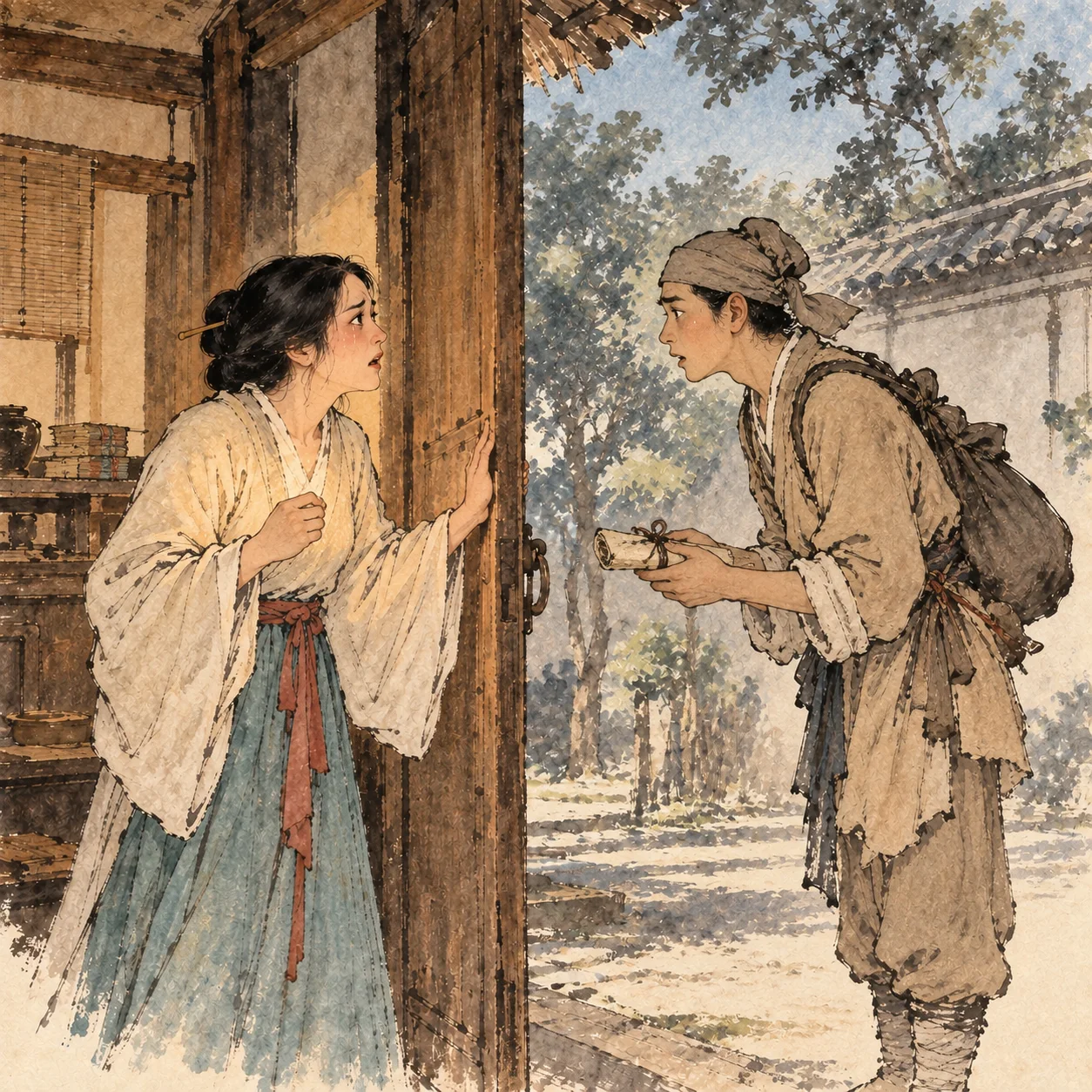
The house did not change with him gone. His writing things still waited where he had left them. The door still opened onto the same path. But each ordinary task ended with the same thought: I cannot tell him about today. When evening came, she closed the door herself and listened to the village grow quiet. In the play, she calls herself an orphaned woman, alone in the house. It is a short line, but it holds the length of all the nights between the news and his return.2鍾妹在戲中自稱獨守家中;日常細節與心聲並非劇本原句。
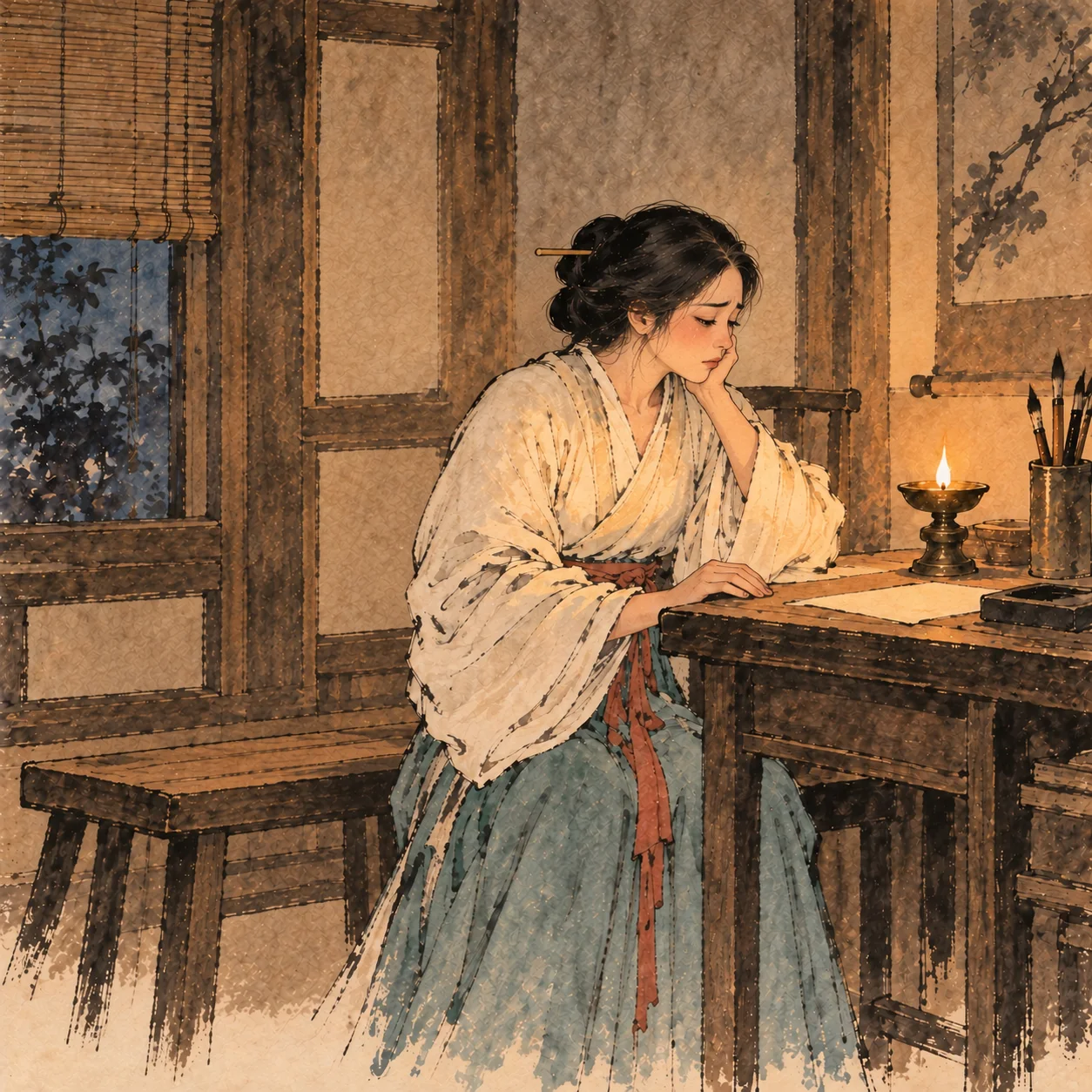
Du Ping did not forget her. He had been Zhong Kui’s friend on the road to the capital, and after Zhong Kui’s death he had buried him. Now he sent a young attendant, Meixiang, to keep his sister company. Meixiang brought another voice into the rooms and another lamp to tend after dark. She could not replace a brother. She could, at least, sit beside the woman he had left behind.3劇中鍾妹說,梅香是杜平送來陪伴她的人。
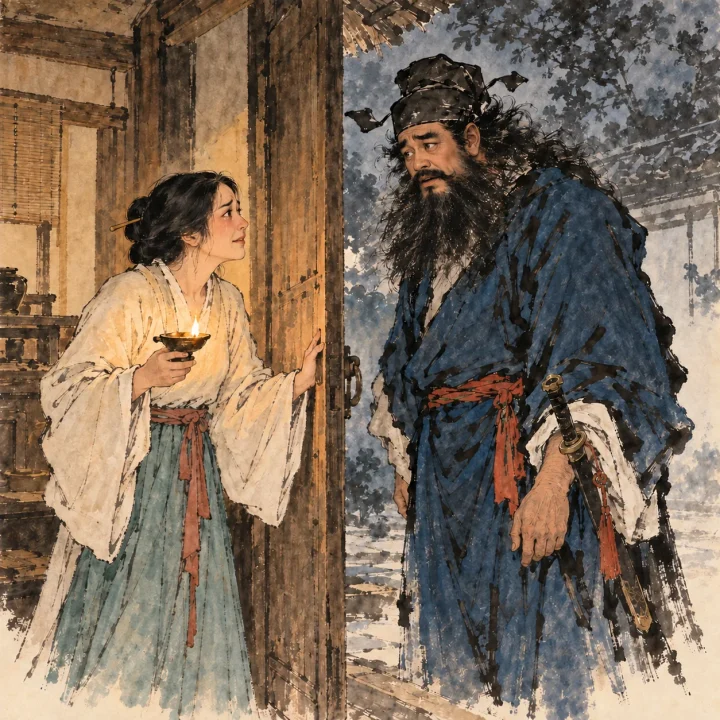
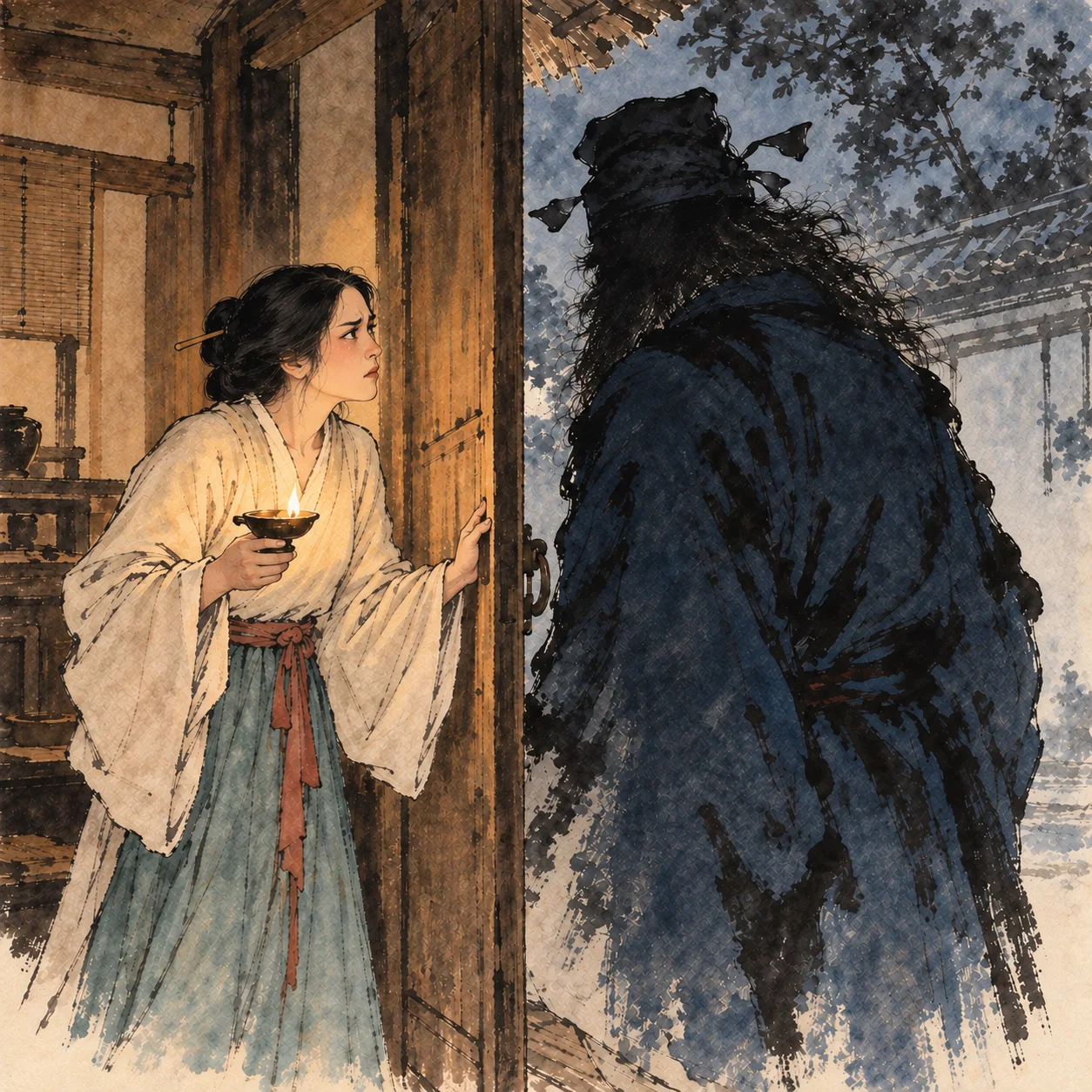
One night, after the first watch sounded, someone knocked at the gate. Zhong Kui’s sister lifted the lamp. No neighbour would call at such an hour. Then a voice came through the wood. “Sister, open the door. It’s me.” She gripped the lamp more tightly. “Don’t use his voice,” she said. “My brother is dead.” The answer came softly: “I know.” She stood without moving for a moment. Then she opened the door.4深夜敲門、開門相認見於劇本;本文多數兄妹對話是改寫。
The man outside was Zhong Kui, and not the Zhong Kui she remembered. The journey, the court and death had changed his face. He stepped inside, while she searched it for the features she had known since childhood. “Brother?” she said at last. He nodded. “I thought you would be frightened.” “I am angry,” she answered. “You promised to write. Instead, a stranger came to tell me where you were buried.” Zhong Kui lowered his eyes. “I could not come home the way I promised.” “But you came,” she said, setting the lamp between them. “So sit down and tell me why.”4深夜敲門、開門相認見於劇本;本文多數兄妹對話是改寫。
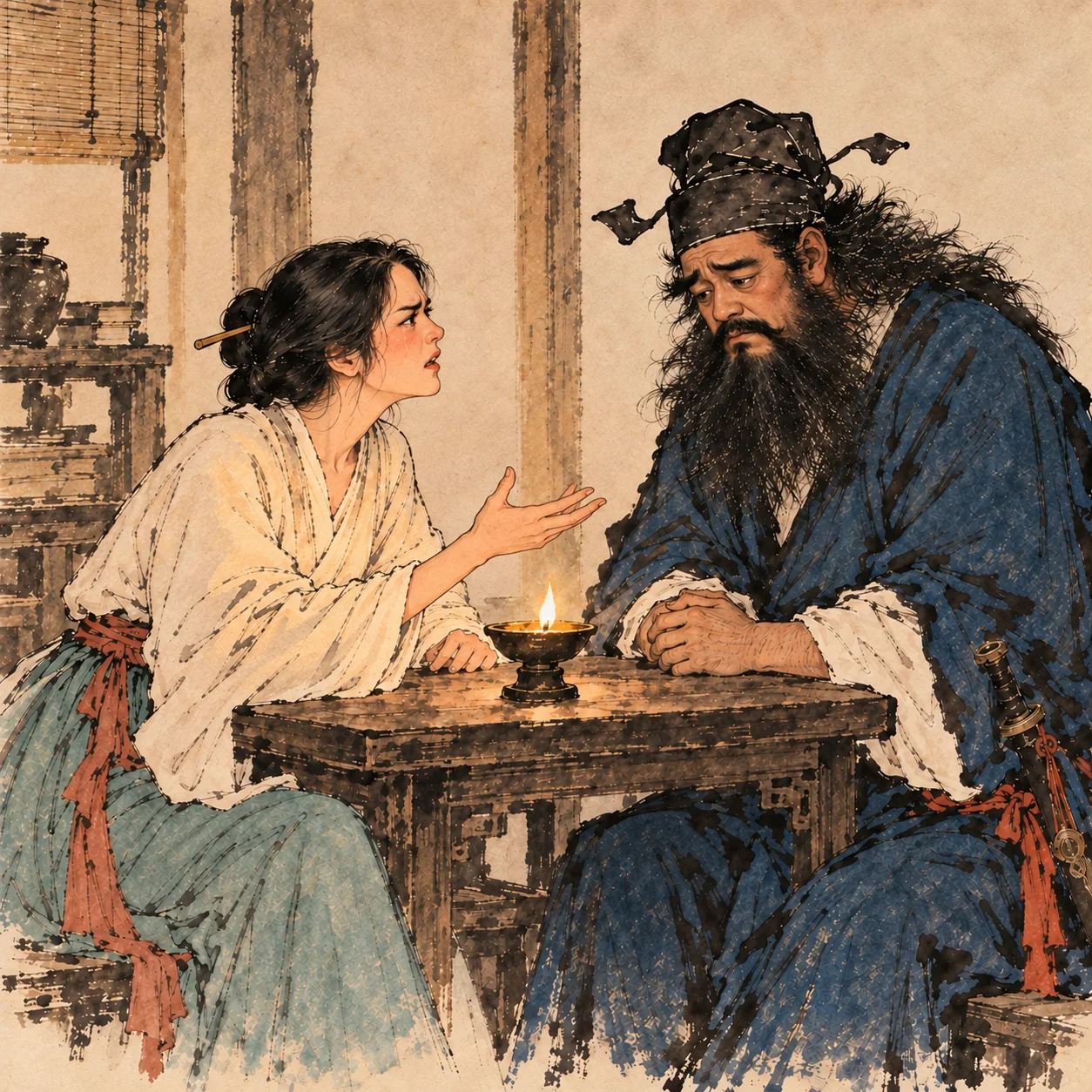
Zhong Kui told her how the journey to the capital had gone wrong, how his appearance had changed, how he had been rejected and how his life had ended. She listened without interrupting until he reached the palace steps. “And afterward?” she asked. “Who stayed with you?” “Du Ping buried me.” “Du Ping,” she repeated. “He sent Meixiang here. I thought he did it because he was your friend.” “He did.” Zhong Kui looked toward the door, beyond which the night seemed to be waiting for him. “He was my friend when I had nothing left for him to gain.”1劇本寫鍾馗死後由杜平收葬;報信者、離家當日與未寄出的信,是本文補寫。
“Then let me thank him myself when he returns,” she said. Zhong Kui hesitated. “I made him another promise. Before I died, I pledged you to him in marriage.” His sister stared at him. “You promised me?” “I thought he would care for you. Tonight I’ve brought a procession to take you to his house.” Outside the gate, ghostly attendants waited with lanterns, a donkey, luggage and wedding music. “You arranged all this,” she said, “before asking me?”5鍾馗生前許婚、死後率鬼卒送嫁,是戲曲情節,不是可考的家族史。
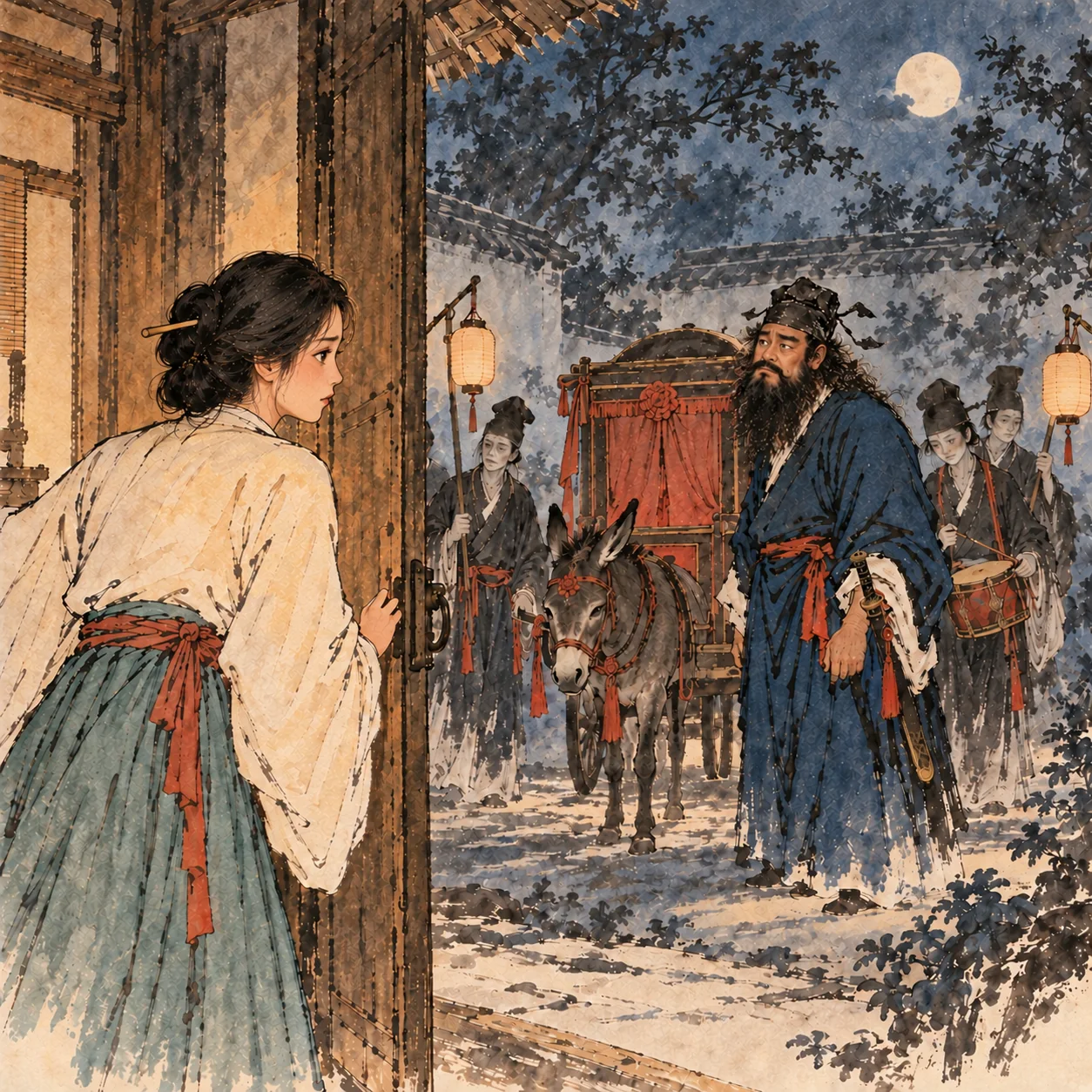
“I wanted to keep you safe,” Zhong Kui said. “You cannot keep me safe by making a decision in my place.” He opened his mouth, then closed it. She went on: “Where is the matchmaker? Where are the proper rites? You knock on my door in the middle of the night with a band of ghosts and tell me to leave. Brother, would you have accepted such a marriage for yourself?” The music outside fell quiet. At last he said, “No.” “Then don’t ask it of me.” She had not said she would refuse Du Ping. She was asking her brother to see her as a person who must choose, not the last duty he had come to settle.6鍾妹要求婚事有媒證、梅香充當媒人見於劇本;較長的爭辯與自主選擇的說法是本文詮釋。
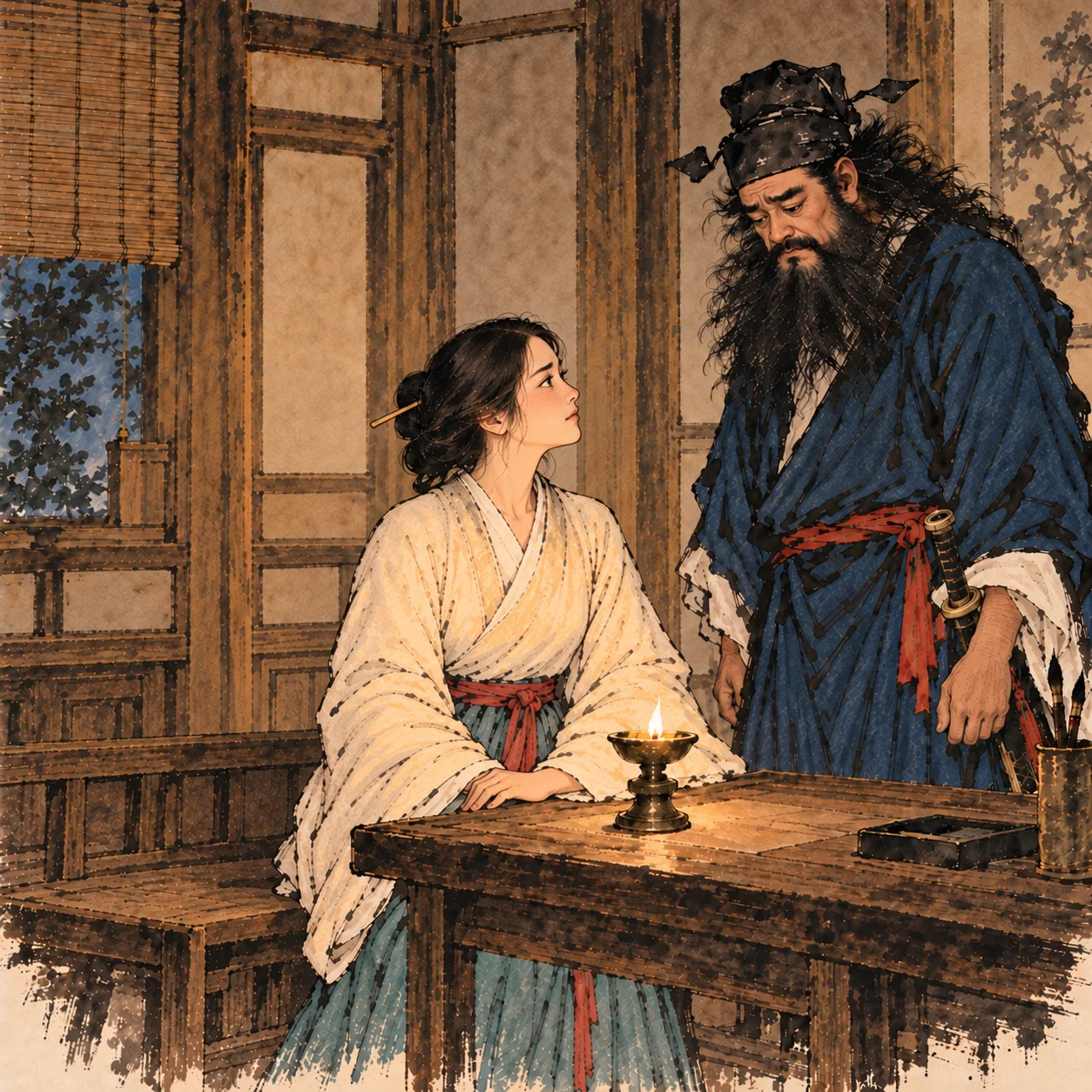
Meixiang entered with her lamp. “I heard voices,” she said. Zhong Kui’s sister reached for her hand. “Tell him how long you’ve been here—and whose kindness brought you.” “Du Ping sent me,” Meixiang said. “And she has not been alone.” Zhong Kui turned back to his sister. “Let Meixiang stand as our matchmaker. If you still wish me to put the procession away, I will.” The answer was imperfect, and the night was still strange. But this time he waited. His sister looked at Meixiang, then at him. “I will go,” she said. “Because I know Du Ping’s kindness for myself. Not because you brought a carriage.”6鍾妹要求婚事有媒證、梅香充當媒人見於劇本;較長的爭辯與自主選擇的說法是本文詮釋。
The procession moved through the dark with pipes, drums and wavering lights. What should have been a joyful wedding looked, from a distance, like a ghost story. Yet inside the carriage Zhong Kui’s sister was no longer simply waiting for news of the dead. She was travelling toward a living future. At Du Ping’s door, the man who had buried her brother came out to meet them. She and Du Ping were joined in marriage while Zhong Kui watched.7鬼卒、笙簫鼓樂、車馬與送至杜家成婚,是戲曲的送嫁主線。
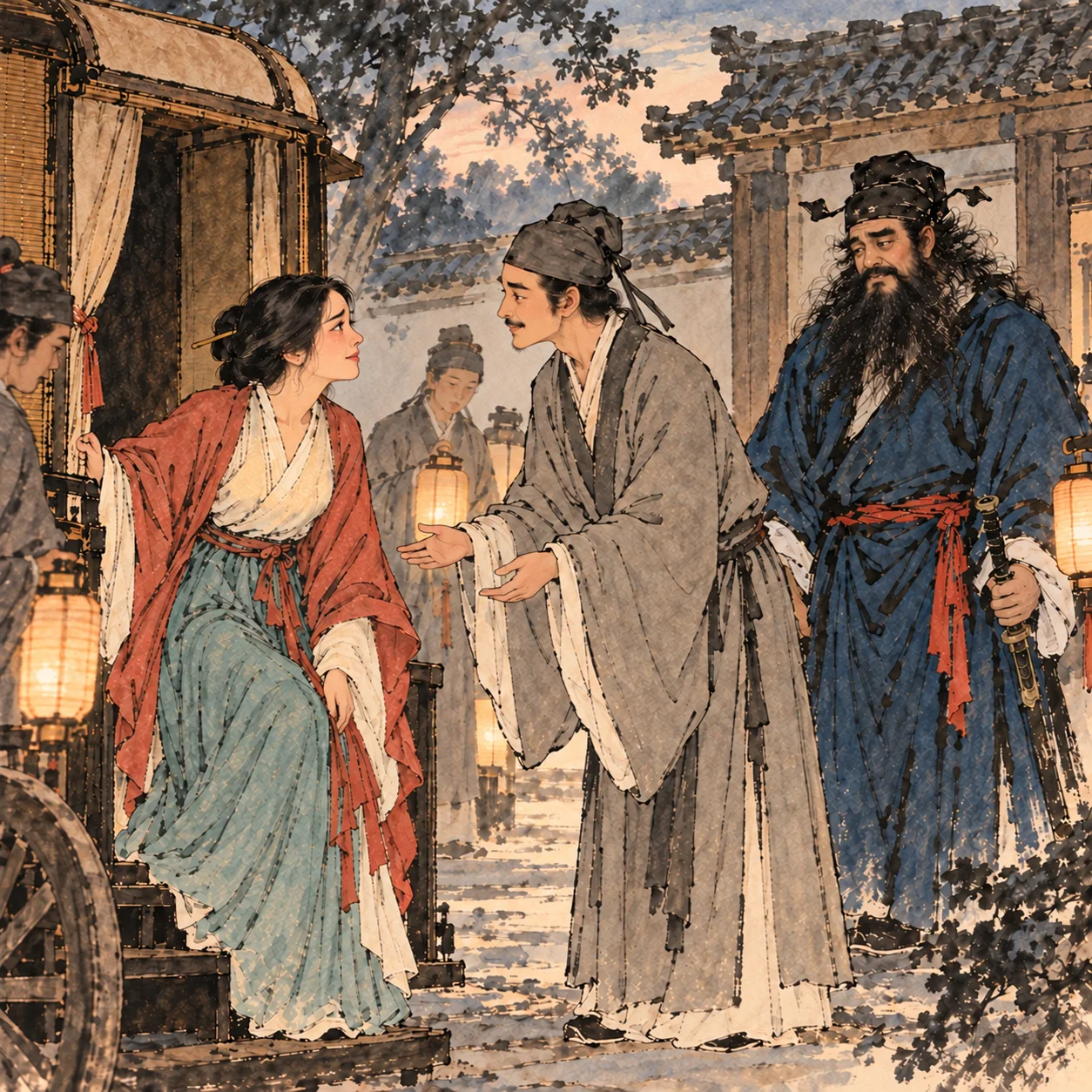
When the ceremony was over, Zhong Kui could not follow them into the life ahead. His sister turned once more. “Will I see you again?” He smiled, but did not promise what he could not give. “You opened the door for me tonight,” he said. “That was enough.”
Story notes
Hover over or focus a note to read its Chinese context. These notes distinguish stage tradition from Storyland’s imagined dialogue.
1. The news and Du Ping’s kindness
The stage story establishes Zhong Kui’s death and Du Ping’s burial of him. The messenger, remembered departure and unwritten letter are Storyland reconstruction. Source
劇本寫鍾馗死後由杜平收葬;報信者、離家當日與未寄出的信,是本文補寫。
2. His sister alone at home
The sister describes herself as alone when she hears a late-night knock. Her ordinary tasks and private thoughts are imagined. Source
鍾妹在戲中自稱獨守家中;日常細節與心聲並非劇本原句。
3. Meixiang’s company
The play identifies Meixiang as the young woman Du Ping sent to accompany Zhong Kui’s sister. Source
劇中鍾妹說,梅香是杜平送來陪伴她的人。
4. The knock and reunion
Zhong Kui’s night return, the door and their reunion follow the play. Most dialogue here is newly written. Source
深夜敲門、開門相認見於劇本;本文多數兄妹對話是改寫。
5. The marriage promise
In the opera tradition, Zhong Kui says he pledged his sister to Du Ping and returns to escort her after death. It is not a verified family event. Source
鍾馗生前許婚、死後率鬼卒送嫁,是戲曲情節,不是可考的家族史。
6. Her objection and the matchmaker
The play gives the sister an objection about proper marriage rites and makes Meixiang the matchmaker. The extended argument and explicit wording of her choice are Storyland interpretation. Source
鍾妹要求婚事有媒證、梅香充當媒人見於劇本;較長的爭辯與自主選擇的說法是本文詮釋。
7. The ghostly procession
The ghost attendants, music and marriage to Du Ping come from the stage story. Source
鬼卒、笙簫鼓樂、車馬與送至杜家成婚,是戲曲的送嫁主線。
8. Another stage ending: three laughs
A later staging ends with Zhong Kui laughing three times after the marriage—joy and the sorrow of parting together. That is not the ending above; the siblings’ final exchange is Storyland reconstruction. Source
另一舞台版本以鍾馗三聲大笑收尾,笑聲兼有喜悅與訣別;正文的最後對話為本文補寫。
Version boundary
This retells an opera and folk-story tradition, not a documented biography of Zhong Kui’s family. The sister has no stable personal name in the consulted script. Private conversations and the final exchange are Storyland’s narrative reconstruction.
本文改寫戲曲與民間故事,並非可考的鍾馗家族傳記;所查劇本未給妹妹穩定本名。私下對話與最後告別均為本文補寫。


